Hello, everyone. I've been away for a bit, but now I'm back! Those of you at my feet, you may now resume grovelling.
As for the rest of you, I'm announcing a slight shift in content. I've been testing out this blog structure, and it's been working well, so I think I'll do more personal entries, when I have things to say. I don't know how often I'll do them, because they're hard to write: I can't be too honest on the internet. (I know how you people do!) Sometimes, though, I have a lot on my mind. This is one of those times.
As I type these words, it is 5:38am December 8th. I finished my last paper an hour ago. Tomorrow is just a review day, but review days are handy. I'd be in bed now, but there's no point: I took a shot of one of those bottled energy products around 2, and I know I won't be able to sleep for another hour even if I try.
You know what, though? I don't feel too bad. I had 4 assignments due today--or rather, yesterday afternoon. Together, they were worth 85% of my mark across the classes. And despite a slightly-questionable work ethic, it's all done, and all on time. (that paper I just finished? You can hand it in at the English office until 8am the next morning, so it's not late yet.)
Two weeks ago, I realized that I'd been working way too hard at my assignments. I'd spend hours and hours cooped up in this concrete cell I call my room, looking at all the things I could say in a paper. I would triumphantly hand it in...and get a 69. A 69's not bad. But it's bad for me. And for those of you of a certain mindset grinning and saying "getting a 69's always good!"...it's not true when you get one from a stuffy professor.
Back in high school, I was a champ. I'd get all kinds of 8's and 9's. I was happy, and I'd shake my head at how the mysterious 10/10 remained elusive. But I didn't write papers to get 10's--I wrote them for fun. If I could infuse any assignment with creativity and fun, I'd do it; the marks came because I'd be one of 4 people in the class who actually tried to do the assignment.
What I didn't realize is that I did write papers to get 8's and 9's. I'd be a little upset with a 75 paper, and 6's didn't really happen. I worked hard at school because everything I did there represented me, and I always wanted to be represented well. I deserve those marks, I'd start to think. I'm a smart guy. I work hard. My assignments are unique--if that matters. The assignments were mostly fun and short, like a Mexican. Times were good.
At university, the 8-grade paper is unattainable. "In order to do well on your assignments, you have to be slightly Jesus", I'd joke to my friends. I said that to just about everyone who asked: I wanted it to be true. I wanted to know that doing really well at university required divine inspiration. Because if Aaron isn't the kind of guy who can represent himself well, who fails to be excellent, maybe it's because...he's not that excellent after all. (A little unfair, no?)
That was only the start, though. University--mine, anyway--is not set up to be a creative institution. You don't do powerpoint presentations; you hand in essays. You don't get graded on the pictures you'd draw in Religion class so that you could divide the "Hinduism" section from the "Judaism" section. (I can't believe they marked those!) The new thing I'm saying to just about everyone who asks is "They want you to hand in the same assignment as everyone else; they just want yours to be slightly better."
So, I wasn't getting satisfactory marks anymore. What did I do? I worked harder. A foolish mistake, I admit; I remember learning a few times that sometimes harder work simply did not pay off. I have a friend, for example, who routinely schools me at Super Smash Brothers. When he'd beat me in a game, I'd put more thought into my play style, and I try to get back at him. It worked reasonably well with other players, but this one friend knew the score, and I was disheartened to find that I'd be defeated just the same, extra concentration or not. Once or twice I got somewhat irate during a game because of this: I was working harder. Where were the results? These days, I just accept that this friend will regularly take me to school when I play against him. (He says I still attack his character a little too much, though. You know who you are.)
I guess I forgot that message somewhere along the line. It didn't help that I took this concept about Uni. to heart: "get what you came for: an education". School comes first, right? I'm paying trucks full of boatloads of cash to be here, and it's interesting stuff, so when I'm out at my job, I ought to know my stuff, as well as having some fun while I'm here.
But I just couldn't do it. I have yet to uncover the secret to an exceptional paper--is there one? I'd work longer and harder on my assignments, all for naught. Weekends would come and go, picked clean by the awesome force that was a Political Science paper. Oh sure, I'd go out, but sometimes it would be for the explicit purpose of taking a break.
I realized I was doing this 2 weeks ago--I simply never questioned time spent on assignments. All that stuff I said I'd do at the start of the year, but eventually couldn't find time for? Schoolwork. Did I just spend the majority of 3 days working on an assignment worth only 15% of my mark? Yes, I did. Schoolwork. (I try to remind myself that that's a small number these days.) Weren't these assignments taking longer to do because they stressed me out? Fo' sho'. Schoolwork.
It was too late, though. That was the same week I came to understand that I had 4 papers due on the last day of class--yesterday. I still have an exam to do tomorrow, and I have another exam 2 days after that.
What do I do?!, I thought. do I calm down, like I must, or do I machine out this last little bit of work, then relax on the holidays? It's a testament to the importance of these assignments that I chose a hybrid of the two, rather than following my own advice.
I worked every day last week on the assignment, and every day this week. I worked at every available minute, but I planned some R&R, too. I actually went home for half of last week to see family and friends--but not for too long. I worked really hard on my assignments, but it wasn't so stressful, as I'm starting to get that maybe--just maybe--Aaron's ability to write a 9/10 paper does not reflect his own greatness as a person. Imagine that. (Also, there was no way I was getting a 10 in English: I didn't finish any of the assigned books >_>)
I can't speak for the two exams this week, but my strategy *kinda* worked. I had a whole bunch of assignments due, but unlike days where I had just 1 or 2 assignments in the past, I handled it rather calmly. Because I didn't obsess about the work though, I missed out on something that might have helped: I'd planned the assignments so that the two biggest ones would get started and finished last.
So I feel fine, but it's 6:18 now. I'm going to catch a few Z's, maybe publish this in the real morning.
--Aaron
Tuesday, December 8, 2009

Saturday, October 17, 2009
Found on the internet: What Happened to Global Warming?

Is the planet still heating up? Well...no. Not at the moment, anyways. The evidence against global warming is growing. Those against the idea that human involvement is causing this heat have been shut down in the past, but now have an important piece of evidence on their side: the planet has not increased in temperature for the last 10 years. They tie this to the warming and cooling periods of the oceans, and state that the recent warming of the earth has been to do with a warm period in the oceans, which has ended, and will return in 30 years. And could the "small" spikes in energy from the sun account for the rises in temperature we've been having?
Climate scientists for global warming insist that global warming does not steadily rise in temperature, and "Mojib Latif, a member of the IPCC (Intergovernmental Panel on Climate Change) says that we may indeed be in a period of cooling worldwide temperatures that could last another 10-20 years." But not everyone agrees on this--some say the temperature will get even hotter between 2010 and 2015--and those who do agree say that the period of cooling is temporary.
What's really going on here?
http://news.bbc.co.uk/2/hi/8299079.stm
Wednesday, October 14, 2009
Review: Ghost in the Shell: Stand Alone Complex

Ghost in the Shell: Stand Alone Complex is an Anime series spanning 26 episodes. The story takes place in a futuristic Japan (2030, as it was thought to look by writers in 2002) where the majority of people have been "cyberized"--had their essence and knowledge placed in computers in their heads, which they can use to communicate with others by thinking it. Cars don't fly, but with new prosthetic limbs and bodies, people can jump pretty darn high. This world is by no means safer, and the plot focuses on a group of special agents called Section 9, who work independent of the government on special cases.
The leader of the group is a woman named Motoko Kusangi, or more often, "Major". Sheusually wears a pink outfit resembling a one-piece bathing suit for most of the show, covered often by an open jacket and pants, or form-fitting clothes for sneaking. It's a little odd at times: she walks around in startlingly revealing garb for much of the show, and her coworkers make note of it a total of once. The show explains that despite having a fully prosthetic body, she chooses the female form for its ability to influence males--if I need any proof that that is exactly what she does, I'd look up "Motoko fanfiction" on Google, but I'm fine. Though it makes sense, her clothes often don't make sense, like a combat vest that only covers her chest and leaves her hips exposed; at any rate, her male coworkers all dress in shirts and suits 99% of the time. It's clear that her character design is an appeal to fans more than a genuine consideration of what life in the future is like. I'm sure there are some people who read that last sentence and yelled "IT'S ANIME!" at their computer screens, but it's worth mentioning that this show objectifies its main character, as it is so forward-thinking in other ways.
Daisuke Aramaki, or "The Chief", is the man pulling strings. He plans out many of the operations the group endeavours, and makes it possible for section 9 to have the best technology and with as much freedom as possible. He is portrayed as entering old age, businesslike, and regularly shown wearing a suit. Other important members of Section 9 include Batou and Togusa, who is notable for having very few cyber modifications and the only one shown with a family.
The future shown here emphasizes technology, and is also notable for being one of the most cynical futures I've ever seen in a TV series, short of presenting a near apocalypse. What I mean to say is that this show is not quite bleak, but it's negative. It's a vibe given off by the environment, which shows urban sprawl, poverty, the abuse of power, and the abuse of technology as much as it shows of technology's benefits. Even environmental groups get a bad rap: one episode shows an environmental terrorist group, fully-armed with hundreds of members, if not more. I suppose that there would be non-violent environmental groups in this world as well, but if this actually were the world of tomorrow, Thoreau would be turning in his grave.
More than anything, I think the show has a message against rapid technological change: there are references to two world wars that haven't happened (yet) in this future, and they appear to be where a lot of the new technology was tested. The show deals with a lot of "cyber-brains", hacking, and terrorist groups with advanced weaponry. As well, every city seems to have a large, vibrant slum, full of street vendors and/or homeless. It all seems to stem from a world adapting painfully to new technology and its uneven distribution.
It's an incredibly complicated show, and it never helps the audience explain what's going on. The show deals with advanced politics, new technology, philosophy (usually basic, but with some well-placed references to classic philosophers), teamwork and family, among others. It does this all as if the audience isn't there, as if the only people listening were the well-trained members of an armed intelligence department in the future, and not people from our world circa 2003. Watching this show on a computer or DVR is recommended, as the ability to pause and think about what's being said is much appreciated.
Overall, it's an intelligent show with a realistic depiction of a future where technology and big government come to roost. It comes recommended for cyberpunk fans who enjoy watching big issues handled...especially with guns.
Monday, October 12, 2009
Film Review: The Invention of Lying

The Invention of Lying is in a world all its own: the social interactions in it are so bizarre that I felt more at odds with it than any film I've seen featuring dinosaurs and/or zombies. Everyone not only tells the entire truth to each other, but if they are thinking anything related to the other person--anything at all--they say it without a second thought. For example, a woman at the start comments "Your baby is so ugly, it's like a little rat," and Anna (Jennifer Garner), the female lead, says that she won't be sleeping with her date tonight to her mother--while on the phone, in front of her date. The world has otherwise developed similarly to ours, but everyone acts like this. It's distinctly odd, and I expect a few people will have a hard time accepting it.
Those who can, though, can expect the same awkward social comedy Ricky Gervais has been peddling on The Office and Extras in the UK for years. Here, though, it seems he has designed the ultimate awkward situation, and he revels in it. His character, Mark Bellison, is an ordinary man at best--and, judging by what his coworkers say to his face, that's being nice. He works at a company that writes screenplays, but since no one invented fiction, they all involve people sitting in a chair reading a story from history. Bellison hasn't been able to make a film people like out of the the 13th Century, since who wants to hear about the Black Plague? Everyone at the office knows he's getting fired (his boss, naturally, couldn't keep it in), and lo, he is fired. When his landlord comes by for the rent, he can't pay it, and is evicted; but when he goes out to the bank to pay the movers he's hiring, he asks for $800 from his account--his rent--instead of the $300 he actually has. The teller, who has never heard a lie, assumes there's an error in the system, and gives him his rent money. Bellison leaves the bank on Cloud Nine.
And so it goes. Like Gervais' previous film Ghost Town, he mixes this straight-faced absurdity with observations on the nature of people, and relationships. Bellison tries to use his "power" for good as well as fortune, by telling people lies that make them feel better or solve problems; naturally, not everything works out.
What's new, though, is a parody of religion, especially Christianity--picture The Life of Brian in a modern setting. This will surprise those who came expecting a straight-up romantic comedy, but it's a major plot device, and is well-written, if a little derivative.
If you can get past the pure oddity of the conceit, you will find that writers Gervais and Matthew Robinson have had a great deal of fun with it, and fans of Gervais' past work will be pleased. Expect this film to develop a cult following.
Tuesday, September 22, 2009
Found on the internet: Immortality 20 years away?
In this article, a prominent scientist suggests that we will be able to achieve immoratality in 20 years by replacing our organs with biotic machines and blood with nanotechnology. It all sounds like something out of Ghost in the Shell, or other robotic visions of the future. I can't see it turning out well. What do you think? Do you suppose this is all nonsense?
http://www.telegraph.co.uk/science/science-news/6217676/Immortality-only-20-years-away-says-scientist.html
http://www.telegraph.co.uk/science/science-news/6217676/Immortality-only-20-years-away-says-scientist.html
Thursday, September 10, 2009
Tikkimann Resolves: Critics vs. Proles

Welcome back, everyone. I have another post today, and I think this one will become an occasional feature. Here, I plan to settle massive disputes that have gone on since the dawn of time, possibly later, by showing how both sides actually can or already do agree with each other.
First off: the critics vs. the proles. The avant-garde vs. the layperson. The Andy Warhols vs. the Joe the Plumbers.
In one corner, we have we have the normal people. (Trust me: the critics wouldn't take that as a slight against them.) The normal people enjoy drinking, making loud noises, watching Two and a Half Men, and listening to Lil' Wayne and Eminem. They earn good money, but not great money, and go out to bars or clubs on weekends with friends. The men tend to enjoy yelling rude things at women whilst holding a bottle of Jack Daniel's and slurring their speech, while the women enjoy dying their hair blond, wearing little to no clothing, and getting offended by the hollering men. Most of them are under 30. Some of them enjoy knitting.
In the other corner, we have the critics. The critics enjoy drinking (the finest vintage Chardonnay from a small village in France destroyed during the Second World War), making (quiet, respectful) noises, watching Mad Men, and listening to The Arcade Fire, Lil' Wayne and Eminem. Except Eminem's later stuff--according to critics, around 2004, Eminem "started to suck". They don't earn that much more than the typical person--in fact, some struggle quite hard to earn money by writing about someone else's work--but you wouldn't know that by looking at the Ivory Tower they hold themselves in. (That's not always a metaphor, either: many critics actually live in an ivory tower.)
Since the dawn of time, the not-abnormal folk have taken issue with the fact that critics seem to prefer artier, less-immediate music, and because they are so well-regarded ("by other critics," a regular person like my fat neighbour Hulio might contend), no one hears about how great their favourite group is. If critics had their way, Nickelback wouldn't be a household name! If no one listened to critics, blogs featuring nothing but pictures of kittens would get the recognition they deserve! If everyone thought like Joe Blow, the world would know that The Boondock Saints IS THE SHIZNIZNIT!! (*for the record, some critics actually like The Boondock Saints, but to my knowledge, none of them have referred to said film as 'the shizniznit'.)
Critics, meanwhile, have regarded these acusations with abruptness, amazement, astonishment, astoundment, attack, awe, bewilderment, bombshell, consternation, curiosity, curveball, disappointment, disillusion, epiphany, eureka, eye-opener, fortune, godsend, incredulity, jolt, kick, marvel, miracle, miscalculation, phenomenon, portent, precipitance, precipitation, precipitousness, prodigy, rarity, revelation, shock, start, stupefaction, suddenness, thunderbolt, unexpected, unforeseen, whammy, wonder, and wonderment. Doesn't the common woman or man recognize that the creativity and style present in "Revolution 9" make it the best song on The White Album? That film studio executives who repeatedly make slow and stately adaptations of undeniably classic novels (like The Men Who Stare at Goats! What legendary nonfiction!) need to be praised and rewarded, unlike people who make simple films with breasts and explosions, like Michael Bay? The dime-a-dozen citizen responds that they don't have time to look that hard at everything, and goes back to, and I quote, "actually living life." (The person quoted went on to spend most of his life watching TV, attending restaurants, going to the movies and listening to music.)
Well really, these people would understand each other a lot more if they just listened a little harder--or less hard, for critics. The fact is, individual critics are obsessed with some element of the human experience, be it film, music, or things I didn't mention like food, fragrances...just about anything. One way or another, they end up learning a whole lot about what interests them, and decided to make studying it a career. Some go on to do work in a field that creates more of their chosen art to study, or become historians, but the people I speak of here chose to reward people who make the best art by writing about them in a public forum.
So, what makes a critic disapprove of your favourite film? They've likely studied thousands more films than you have, and while a popular film in wide release may be slick and/or filled with action, more advanced viewers will look for something more--or they're wrong. It happens.
What makes a regular dude like popular tunes, while the critic scorns them? Because occasionally, a great artist will be both great and popular, but there are so many artists who don't have an audience like popular artists do that there's almost always someone out there doing the same thing in a different--dare I say, better?--way. Three other things:
That's all. Battle settled. Critics and everyday people, you can like each other now. Thank me later.
(Thanks to Thesaurus.com for that middle section)
First off: the critics vs. the proles. The avant-garde vs. the layperson. The Andy Warhols vs. the Joe the Plumbers.
In one corner, we have we have the normal people. (Trust me: the critics wouldn't take that as a slight against them.) The normal people enjoy drinking, making loud noises, watching Two and a Half Men, and listening to Lil' Wayne and Eminem. They earn good money, but not great money, and go out to bars or clubs on weekends with friends. The men tend to enjoy yelling rude things at women whilst holding a bottle of Jack Daniel's and slurring their speech, while the women enjoy dying their hair blond, wearing little to no clothing, and getting offended by the hollering men. Most of them are under 30. Some of them enjoy knitting.
In the other corner, we have the critics. The critics enjoy drinking (the finest vintage Chardonnay from a small village in France destroyed during the Second World War), making (quiet, respectful) noises, watching Mad Men, and listening to The Arcade Fire, Lil' Wayne and Eminem. Except Eminem's later stuff--according to critics, around 2004, Eminem "started to suck". They don't earn that much more than the typical person--in fact, some struggle quite hard to earn money by writing about someone else's work--but you wouldn't know that by looking at the Ivory Tower they hold themselves in. (That's not always a metaphor, either: many critics actually live in an ivory tower.)
Since the dawn of time, the not-abnormal folk have taken issue with the fact that critics seem to prefer artier, less-immediate music, and because they are so well-regarded ("by other critics," a regular person like my fat neighbour Hulio might contend), no one hears about how great their favourite group is. If critics had their way, Nickelback wouldn't be a household name! If no one listened to critics, blogs featuring nothing but pictures of kittens would get the recognition they deserve! If everyone thought like Joe Blow, the world would know that The Boondock Saints IS THE SHIZNIZNIT!! (*for the record, some critics actually like The Boondock Saints, but to my knowledge, none of them have referred to said film as 'the shizniznit'.)
Critics, meanwhile, have regarded these acusations with abruptness, amazement, astonishment, astoundment, attack, awe, bewilderment, bombshell, consternation, curiosity, curveball, disappointment, disillusion, epiphany, eureka, eye-opener, fortune, godsend, incredulity, jolt, kick, marvel, miracle, miscalculation, phenomenon, portent, precipitance, precipitation, precipitousness, prodigy, rarity, revelation, shock, start, stupefaction, suddenness, thunderbolt, unexpected, unforeseen, whammy, wonder, and wonderment. Doesn't the common woman or man recognize that the creativity and style present in "Revolution 9" make it the best song on The White Album? That film studio executives who repeatedly make slow and stately adaptations of undeniably classic novels (like The Men Who Stare at Goats! What legendary nonfiction!) need to be praised and rewarded, unlike people who make simple films with breasts and explosions, like Michael Bay? The dime-a-dozen citizen responds that they don't have time to look that hard at everything, and goes back to, and I quote, "actually living life." (The person quoted went on to spend most of his life watching TV, attending restaurants, going to the movies and listening to music.)
Well really, these people would understand each other a lot more if they just listened a little harder--or less hard, for critics. The fact is, individual critics are obsessed with some element of the human experience, be it film, music, or things I didn't mention like food, fragrances...just about anything. One way or another, they end up learning a whole lot about what interests them, and decided to make studying it a career. Some go on to do work in a field that creates more of their chosen art to study, or become historians, but the people I speak of here chose to reward people who make the best art by writing about them in a public forum.
So, what makes a critic disapprove of your favourite film? They've likely studied thousands more films than you have, and while a popular film in wide release may be slick and/or filled with action, more advanced viewers will look for something more--or they're wrong. It happens.
What makes a regular dude like popular tunes, while the critic scorns them? Because occasionally, a great artist will be both great and popular, but there are so many artists who don't have an audience like popular artists do that there's almost always someone out there doing the same thing in a different--dare I say, better?--way. Three other things:
- People have a desire to be on the cutting-edge, to know what's really good, and when someone goes on and on about how great a popular artist is, it's human nature to try to stand out by saying you like someone different. Critics are probably a little more immune to this, but will still have a list of bands/movies/etc. that they like just as much as your favourite artist.
- When that lousy "critic-shmitic" gives your favourit Linkin Park album a 6, it's entirely possible that when they end the article by saying it's an alright album...they mean it. Really! Many if not most critics aren't in a position where they have to pander to interests by humoring the band with a three out of five, and genuinely thought the band was okay. Just--y'know--not as good as a few of the other CDs she or he's heard that week. And honestly, does everyon HAVE to love the same music you do?
- When a critic wonders out loud why everyone is going to see this terrible film when it is "clearly" a piece of utter trash, it's because they know all about film, they go out of their way to support good filmmaking, it's because they love their genre, they're paid to talk about it, and YOU PAID MONEY TO SEE TRANSFORMERS 2. WHAT THE HELL. DID YOU SEE THOSE RACIST ROBOTS?! AND (spoiler ahead) WASN'T THERE SOME KIND OF GIANT SPACE CANNON UNDER THE PYRAMIDS?! You're better than that! And then studios look at that, see what sells, and sure enough, Warner Bros. releases GanGstAA RoWWBawwwtz II: aTTAK O' da MinnI-Vanns (feat. Adidas) in 2010. They can't help but be mad, friends.
That's all. Battle settled. Critics and everyday people, you can like each other now. Thank me later.
(Thanks to Thesaurus.com for that middle section)
Monday, September 7, 2009
The Importance of Originality When Evaluating Art
A week or two ago, I had a debate with a friend about the value of creative, original design when considering the worth of a video game. Why is The Legend of Zelda: Ocarina of Time considered a better game than The Legend of Zelda: The Wind Waker? He asked. While not strictly a sequel, The Wind Waker has similar gameplay to Ocarina of Time, has some of the same locations, and has design based on the original Legend of Zelda games: a large world map filled with monsters, cities and dungeons where the hero, Link, goes on a quest to rescue the princess Zelda and ostensibly save the land of Hyrule from great harm and/or destruction.

What makes Ocarina of Time unique in the Legend of Zelda series is that it is the first to take place in 3-D. The previous games took place on systems with little or no capacity for 3-D graphics, and Link would travel the kingdom as seen from above, displayed on a 2-D map. The gameplay in three dimensions allowed the player the ability to move their character in 360 degrees of motion; moreover, new features were introduced, like the ability to lock on to moving targets and context-sensitive buttons that would become staples of adventure gaming.
The Wind Waker was released in 2003 in most territories, 5 years after the 1998 release of Ocarina of Time. It innovated, as well: the game featured stylish cel-shaded graphics, the ability to pick up and use some enemy weapons and a new sailing mechanic that involved controlling the wind. Yet, it featured essentially the same control scheme found in the Ocarina of Time from 1998, and walking, running, attacking, automatic defending and automatic jumping are unmodified.


Reviews for the game were very positive, though most sources noted that Wind Waker didn't feel as fresh as Ocarina of Time did, and reviews weren't as great as for Ocarina of Time. This bothered my friend. "Wind Waker is a better game," he argued. "Why does Ocarina of Time get the high placements on best-of lists?" Dissuading most criticisms of Wind Waker, he argued that it looked and played better than Ocarina of Time did. "What impact does originality have on gameplay?"
I disagreed with what he said, and argued with him. Innovation does matter!, I cried. Problem was, I couldn't really say why. Having played Wind Waker only briefly, I couldn't offer too much as to why the game would be better or worse. If Wind Waker was a 'better' game, then it should deserve more respect...but no. I couldn't put my finger on it, but originality was important, too. Erm...quality didn't really matter! Ocarina of Time did it first!
"So what?" My friend asked. "What impact does that have on gameplay?" Wind Waker did it better, he'd say.
We didn't reach a conclusion in that argument, but I've given it some thought, and I think I know now why originality is so much more important in the grand scheme of things.

Consider the painting Voice of Fire. It's a simple-looking painting, featuring two big, long strips of blue paint surrounding a single strip of red. It caused contraversy when the National Gallery of Canada bought it for 1.8 million dollars (http://en.wikipedia.org/wiki/Voice_of_Fire). It was easy to look at a painting of a red stripe on blue background and think it was an unworthy purchase, but Voice of Fire is unique. I saw the painting on a trip to Ottawa a few years back, and it generates a unique effect in person: if you look at the painting in a certain way, waves of red leap from the sides of the red stripes like fire, and it's an amazing thing to see. The little .jpg you see here does not do it justice. I suppose any painter could have made the three-coloured painting in a way that created such an effect, but the artist, Barnett Newman, did. If someone were to make a perfect recreation of Voice of Fire today, no art institution would purchase it, let alone for 1.8 million. Just because something can be done, and improved upon, doesn't make it better, as being the first with an original concept has a value all its own.
Let me put this another way, for game owners. The football game series Madden comes out with a new game every year, and adds a number of changes or improvements to the previous installment, along with routine changes like updates to the NFL rosters. I have a friend who jokes that the only thing they change from year to year in the games is the number on the box. It's not true, of course, but it got me thinking: what if one year, a Madden game made almost no changes at all? What if they went into Madden NFL 10, made the grass look better, updated the rosters, and released the game as Madden NFL 11? They could advertise that the game was strictly better than its predecessor, and featured updated graphics. They'd be right; however, people would hate it. The game would receive dreadful reviews, fans would express outrage, and it would sully the brand name. Each Madden game has attempts to update gameplay, adds new features, and, well...innovate. Even if the graphics in Madden NFL 11 were improved dramatically, if the gameplay remained unchanged, people would be disappointed.
Now, the Wind Waker is not strictly better than Ocarina of Time. It does actually innovate, and considering that the game has an average critic score of 96/100 on Metacritic, which aggregates reviews, it certainly isn't considered a terrible game by any means (http://www.metacritic.com/games/platforms/cube/legendofzeldathewindwaker?q=wind%20waker). In fact, a number of critics who have played rereleases of Ocarina of Time found the game dated, at least graphically (http://cube.ign.com/articles/387/387479p2.html). But even if we accept that Wind Waker is a better game in terms of graphics, gameplay, music...on every physical level, Ocarina of Time can still be considered a better game, if we accept that it is more innovative. Such things are subjective, but since an innovative game will likely make a big impact on a player, we can expect to see Ocarina of Time place higher on best-of lists for years to come...much to my friend's chagrin.
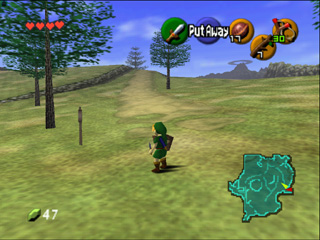
What makes Ocarina of Time unique in the Legend of Zelda series is that it is the first to take place in 3-D. The previous games took place on systems with little or no capacity for 3-D graphics, and Link would travel the kingdom as seen from above, displayed on a 2-D map. The gameplay in three dimensions allowed the player the ability to move their character in 360 degrees of motion; moreover, new features were introduced, like the ability to lock on to moving targets and context-sensitive buttons that would become staples of adventure gaming.
The Wind Waker was released in 2003 in most territories, 5 years after the 1998 release of Ocarina of Time. It innovated, as well: the game featured stylish cel-shaded graphics, the ability to pick up and use some enemy weapons and a new sailing mechanic that involved controlling the wind. Yet, it featured essentially the same control scheme found in the Ocarina of Time from 1998, and walking, running, attacking, automatic defending and automatic jumping are unmodified.

Reviews for the game were very positive, though most sources noted that Wind Waker didn't feel as fresh as Ocarina of Time did, and reviews weren't as great as for Ocarina of Time. This bothered my friend. "Wind Waker is a better game," he argued. "Why does Ocarina of Time get the high placements on best-of lists?" Dissuading most criticisms of Wind Waker, he argued that it looked and played better than Ocarina of Time did. "What impact does originality have on gameplay?"
I disagreed with what he said, and argued with him. Innovation does matter!, I cried. Problem was, I couldn't really say why. Having played Wind Waker only briefly, I couldn't offer too much as to why the game would be better or worse. If Wind Waker was a 'better' game, then it should deserve more respect...but no. I couldn't put my finger on it, but originality was important, too. Erm...quality didn't really matter! Ocarina of Time did it first!
"So what?" My friend asked. "What impact does that have on gameplay?" Wind Waker did it better, he'd say.
We didn't reach a conclusion in that argument, but I've given it some thought, and I think I know now why originality is so much more important in the grand scheme of things.
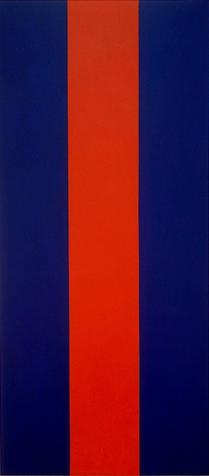
Consider the painting Voice of Fire. It's a simple-looking painting, featuring two big, long strips of blue paint surrounding a single strip of red. It caused contraversy when the National Gallery of Canada bought it for 1.8 million dollars (http://en.wikipedia.org/wiki/Voice_of_Fire). It was easy to look at a painting of a red stripe on blue background and think it was an unworthy purchase, but Voice of Fire is unique. I saw the painting on a trip to Ottawa a few years back, and it generates a unique effect in person: if you look at the painting in a certain way, waves of red leap from the sides of the red stripes like fire, and it's an amazing thing to see. The little .jpg you see here does not do it justice. I suppose any painter could have made the three-coloured painting in a way that created such an effect, but the artist, Barnett Newman, did. If someone were to make a perfect recreation of Voice of Fire today, no art institution would purchase it, let alone for 1.8 million. Just because something can be done, and improved upon, doesn't make it better, as being the first with an original concept has a value all its own.
Let me put this another way, for game owners. The football game series Madden comes out with a new game every year, and adds a number of changes or improvements to the previous installment, along with routine changes like updates to the NFL rosters. I have a friend who jokes that the only thing they change from year to year in the games is the number on the box. It's not true, of course, but it got me thinking: what if one year, a Madden game made almost no changes at all? What if they went into Madden NFL 10, made the grass look better, updated the rosters, and released the game as Madden NFL 11? They could advertise that the game was strictly better than its predecessor, and featured updated graphics. They'd be right; however, people would hate it. The game would receive dreadful reviews, fans would express outrage, and it would sully the brand name. Each Madden game has attempts to update gameplay, adds new features, and, well...innovate. Even if the graphics in Madden NFL 11 were improved dramatically, if the gameplay remained unchanged, people would be disappointed.
Now, the Wind Waker is not strictly better than Ocarina of Time. It does actually innovate, and considering that the game has an average critic score of 96/100 on Metacritic, which aggregates reviews, it certainly isn't considered a terrible game by any means (http://www.metacritic.com/games/platforms/cube/legendofzeldathewindwaker?q=wind%20waker). In fact, a number of critics who have played rereleases of Ocarina of Time found the game dated, at least graphically (http://cube.ign.com/articles/387/387479p2.html). But even if we accept that Wind Waker is a better game in terms of graphics, gameplay, music...on every physical level, Ocarina of Time can still be considered a better game, if we accept that it is more innovative. Such things are subjective, but since an innovative game will likely make a big impact on a player, we can expect to see Ocarina of Time place higher on best-of lists for years to come...much to my friend's chagrin.
Subscribe to:
Posts (Atom)
