Wednesday, August 18, 2010

5-10-15-20: Television

This is the second in a series; see here for the original: http://tikkimann.blogspot.com/2010/08/5-10-15-20.html


Age 1-ish


Rock With Barney

I didn't see much Barney on TV; I caught a bit of Sesame Street, though. At least, this is what I'm told by mom--apparently, my sister took control of the TV when she was around, leaving me to watch what she did--but this period in television-watching is mostly a blank for me. If I were to see references to favourite episodes today, I'd probably remember the scene, but I haven't seen much of the show since--or others from that period; I recall little more than Bert and Ernie and my confusion at the real-life children acting normally towards puppets.

But I'm told I did see some Barney. I'm cheating the timeline slightly, but I'm deeply amused by this story, and thought I'd share it. Back when my sister was at the appropriate age to watch Barney (2-4) and I had yet to master this "running" thing, my mom would supplement her parenting with some Barney VHS tapes--straight-to-video Barney shows that preceeded the creation of the television program. (apparently, this: http://en.wikipedia.org/wiki/Rock_with_Barney) I watched a few of these shows with my sister. When Barney sang a song, I guess we liked it; my sister would jump around, sing along...it all depended on the song and her mood.

As for me? I stood in front of the television set, about 2 feet away, and stared at the screen.


I take this as an early sign of my interest in music. "What's this...rhythm business?! It's like regular sound, but more appealing. And don't those old kids know they're talking to a purple dinosaur?!"

Age 5


Power Rangers-Maybe three of the seasons

I gotta say, I don't think minors have very good taste in entertainment. I used to watch this show all the time when I was a kid--it was on every Saturday, right? I had a grand old time. It was exciting to see the the good guys dress up in their secret identities and beat the evil, cackling (often literally) bad guys. I didn't think of it at the time, but I thought the elaborate fight maneuvers, and the giant robot battles were cool.

Just about every episode, the rangers would fight some goon that the behind-the-scenes evil person would send at them; this person would rarely be seen before or since, but the Rangers usually had a difficult fight with the villain. And when the behind-the-scenes evil saw the goon finally losing, they would have the goon grow hundreds of times in size, forcing the rangers to enter their animal-esque robot devices/Zords (if they hadn't already) and perhaps turn into a really big robot/Megazord! Take that, generic villain! the Rangers would get closer and closer to fighting the evillest baddie behind-the-scenes, and it always took longer than I hoped it would.

I watched this show many, many times, leaving only a few years later when I begun to grasp the formula. This was the same with many other shows on YTV, but I had a good time while they were on, though. And why not? It's not like I'd experienced high art at that point, and I wouldn't have understood something like that at a young age, anyway. I had to develop my taste, and it was only once I'd seen shows that were merely decent, if not outright awful, that I begun to differentiate. This is why I always find it odd when critics describe a kid's movie as being great: it's not just that it's usually a grown adult giving the review and recommendation, but also that, when you've seen only a few films or television in your life before, almost any fantastic storyline seems new and exciting to you. It's good to read those reviews when going to the movies with youngsters because you've likely developed those standards. When it comes to young kids themselves, however, I sometimes feel that if you were to watch an outdoor rave party at a distance with a young one, and tell a story about it, they would be equally enthralled.

Age 10


Monster Rancher

Another show about monster battles that mirrors popular video game franchise. Boy is good at Monster Rancher game; boy wins tournament and special early copy of new game; boy gets sucked into game universe; adventures ensue.

In retrospect, this show disappointed me. The characters were distinct and interesting, and the plots often hinted at deeper themes. For example, there was an episode where a Henger (humanoid robot) who was programmed to keep a city clean while its inhabitants were off fighting a war breaks away from its programming by accident, and learns that the humans the robots were built to serve had all died in that war, ages ago. He goes back and tries to tell his former robots what happened, but he is considered defective and is nearly destroyed in the process. It recalls the Socratic Myth of the Cave in its depiction of a sentient being who has learned, but but no one believes him, and could be compared to the novel 1984 in its depiction of a purely obedient, strictly-ruled society, and makes me wonder if there is something that much of human society is working for now that is utterly useless, and we simply are mistaken in working towards it. It was reminiscent of Star Trek in this sci-fi way of addressing social issues abstractly.

However, most episodes did not plumb so deep. Some of the enemies the characters encountered in the show were simple villains, with little more than a character tick and a faux-philosophic line to differentiate them from everyone else. And there were more simple episodes devoted more specifically to the monster battles themselves; it's as if the show was trying to split the difference between a more philosophic teen audience and a younger audience that just wanted to see fantastic monsters do battle with the bad guys.

Or maybe I was too young to appreciate it. That episode I dissected above sounds a lot better now than when watched it.

Age 15


MuchMusic Countdown

As noted in the last 5-10-15-20, this is about when I started "getting into" music, as much as I can say that. Around this time, I watched a whole lot of Much Music; I didn't have as much homework then as now, MuchMusic played a lot more_actual_music_than it does today, and my musical tastes weren't as obscure then. I remember seeing tons of 50 Cent. changing the channel whenever Hedley came on. I remember thinking Rihanna was pretty generic (Umbrella hadn't come out yet; as a singer, she still kinda is, but no one's gonna say that). The videos rarely stuck with me, but the music did; increasingly, I just put Galaxie radio on or somesuch when I want to watch something on commercials.

Age 20


Robot Chicken

It's one thing to start liking low-brow comedy; it's quite another to dislike it until being slapped by quality humour across the face. Robot Chicken certainly isn't for everyone, but even in this day and age, where I spend more and more time in front of a laptop instead of a computer, I find time out of my day to head down and watch 15-30 minutes of this. Quite simply, no show mashes together different elements of pop culture quite like this one; it doesn't always say something, but the best jokes make you feel like it has. My favourite gags include a short about a morbidly obese man who rescues a kid from a burning building using a forklift; an episode of the surreal life where MC Hammer et all have to return the one ring of power to Mordor; a Sir Mix-a-Lot rap about why King Arthur and his knights ought to get a round table for their meetings (featuring the real Sir Mix-a-Lot!) and a teenybopper biopic of Anne Frank, starring Hilary Duff.

For many of you, I likely preach to the converted, but if you haven't opened yourself up to absurd humour and television that seems "below you", you might be missing out. Sometimes. (Watching Jersey Shore is still a waste of time.)

Tuesday, August 10, 2010

5-10-15-20

Hello, all! Sorry for the absence; I've been busy with work, as well as procrastination. (Can't ya tell?!) This summer's been a memorable, exciting one though, and I'm grateful for that.
Today, I thought I'd start a small series here. 5-10-15-20 is a series that occasionally runs on the website http://pitchfork.com/ , where the site talks "to artists about the music they loved at five-year interval points in their lives." I thought it would be interesting to do the same for myself today, but here's where the (modest) originality comes in: for the next 3 Wednesdays, I will also write about the television shows, websites, and movies I liked at five year intervals, as well. (If I get a good response from this, I might write about the books I loved, too.) I'd like to say that I hope Pitchfork doesn't send me a cease-and-desist order for this, but admittedly that would be pretty cool.

Age 5

"You are the Sunshine of my Life" by Stevie Wonder


This is a cheerful, upbeat tune from Stevie at his prime; full of clever instrumentation and having an overall warm atmosphere. That's my initial reaction anyway; I listened to it today for the first time, and it made me smile for more than one reason.
My father loves to hum songs from his past when he's on the move, and I slowly absorbed them. This one is one of the first I remember hearing, and I know how my dad whistles this tune, how he only seems to remember the first two lines, the unusual phrasing of the second line, and the improvisation he makes for the rest of the song--and much of this, I know by heart. May you all get the chance to know a loved one's idiosyncrasies so well.

Age 10

"Try Again" by Aaliyah


It might surprise some of you to know this, but I once abhorred listening to the radio. "Turn it off!" I would say from the back seat. "Let's talk instead!" I saw music as a barrier to conversation, and I found my friends and family to be more intellectually and emotionally satisfying than any static piece of music. I'd express my annoyance every time the radio was turned on, and while my mother often complied when it was just me and her, but my sister loved her mainstream dance and pop radio stations, and while a minor argument would often ensue, the result was that I often sat in (relative) silence as Z103 played on the radio.

I'm glad my sister won those arguments in retrospect, because I have developed a deep memory for pop music from that period. "Try Again" stands out as a great example of this, heavily played as it was in the year 2000. It's also a great example of a song I'm so familiar with, that is so foundational in my understanding of music, I can hardly imagine hearing a pop song without it. It's not because this is a particularly great song--although it is--but because it was a tune that stuck in my brain when I was young, and served as a basis for considering and comparing music of similar genres that were to come. I know every note in this song before it comes; even if I cannot recite them, or have memorized the lyrics, I know the sounds and instruments of this song, note for note. Other songs that had this impact on me include Bran Van 3000's "Astounded", Cher's "Believe", and "No Scrubs" by TLC.

Age 15

Demon Days by Gorillaz (album)


I went to the mall with friends almost every Thursday at this point. I would see them buy albums, and I grew curious. Sure, I could hear the elegant, shiny radio song, but if a song or band really interested me, I should listen to their album to get a broad picture of what they're really about. The first CD I got was Blink 182's self-titled album, purchased on a friend's advising; I listened to half of it once, then my sister took it. I saw it once more--badly scratched--then never saw it again. A few months later, when more strongly considering purchasing albums, I took a long, hard look at the Sloan's greatest hits: I liked the band, they were Canadian, and how could I go wrong with a greatest-hits collection? But if I did this, and I liked the music, I knew I would be tempted to buy another album, and then more, creating a new vice in my life. As I was thinking about all of this, the attendant at the sadly-shuttered Sunrise Records asked, "Do you want help with anything?" I slowly turned around and said "...Yes. I'd like to buy this."

I went home, and for the first time, I put the CD on my computer. There, I listened to the music with convenience, as I worked. The album was good, but I knew this was the same shiny music I would have heard on radio at various points between 1992 and now--or I should say, 2005. I cautiously returned to Sunrise Records, and after some research and consideration, I purchased the album Demon Days by Gorillaz, at what I felt was a great personal cost (15 dollars!). The album had received exceptional reviews, and more importantly, it contained a song I liked: "Feel Good, Inc."

The album was a minor revolution in my life. Containing numerous great songs and a full suite of memorable ones, Demon Days helped change my perspective on music. It contained many songs that would go on to be hits (Dare, Dirty Harry), and a few others that were so good, I felt blessed that I had heard them when many people with radios would not (O Green World, Kids With Guns). Even the weak points on the album were memorable, providing the messy experiments I'd hoped to hear from a band--albeit a fictitious one--on an album (White Light, Fire Coming Out of the Monkey's Head). Expecting more of the same, I would purchase many more albums, with varying degrees of satisfaction, but I always remembered my first true album experience.

Age 20

Plastic Beach by Gorillaz (album)


2010's been a disappointing year in new music for me, personally. I was let down by a few releases I was excited for (Holy F***, Trent Reznor in How to Destroy Angels), and some other greats were only pretty good when I'd expected great (Crystal Castles, the new Gucci Mane mixtape). I have a feeling I'll revise this year's post if I ever get the chance to rewrite this, as Kanye West looks to be coming out with a new disc this year, and what I've heard so far has been incredible.

Until then, it seems things have come full circle. The new Gorillaz album was exciting and fun, living up to my sky-high expectations. I now know a great deal more about the band than I did when I picked up their first album, and I see how Damon Albarn, the British pop star who is secretly this band's mastermind, has grown as an artist; this album , coming after the score he wrote for an operatic retelling of a classic chinese story (http://www.metacritic.com/music/artists/monkey/journeytothewest?q=monkey%20journey) and the sombre, similarly-different album with the group The Good, the Bad and the Queen (http://www.metacritic.com/music/artists/goodthebadandthequeen/goodthebadandthequeen?q=the%20good%20the%20bad%20and%20the%20queen), the album is less-accessible but very artistic, just as I'd expected. I find it funny that Damon Albarn thinks that stuff like this is "pop":

Tuesday, June 1, 2010

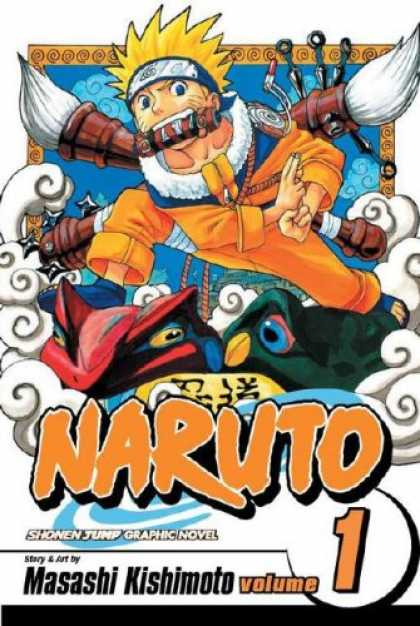
Reflections on the Naruto Manga


I bought my first manga(mangas? How do you pluralize that?) this weekend at Anime North. I've had a good time with the ones I've read so far, and intend to read some more, though I think I still prefer novels. Ironically then, reading a manga has been a novel experience: reading text from right to left reminded me somewhat of the Hebrew texts my family reads at Passover, and being used to reading things like Archie comics, seeing the black-and-white anime art style applied on paper seemed unusual and interesting.

The first manga I read was Black Cat vol. 1, but I also decided to pick up the first two volumes of Naruto, and see what the fuss is about. Naruto, if you're not familiar, is the Justin Bieber of anime: extremely popular, very visible within anime culture, with a devoted following and its own legion of hipper-than-thou detractors. I'm not familiar with manga as much as some of my friends are, so though they helped me pick out a few good mangas, I decided to go with a sure thing: either I would be suitably entertained, or at the very least I would be able to understand the phenomenon more. Here are my first impressions. (be aware that there are spoilers ahead.)

Naruto is an orphaned ninja-in-training in a fictional pseudo-medieval, pseudo-Japanese world. He has spiky blond hair, wears a orange jacket, and longs to become his village's "Hokage": a leader coming from a grand tradition of Hokage and is the most elite ninja in the village. What kind of ninja has bright blond spiky hair and an orange jacket?m you might ask, and the answer is what you expect: a ninja with a troublesome attention-seeking problem, who is not very good at being a ninja. He invents spells solely to make pranks, raises mayhem all over the village, and is generally disliked by his fellow villagers.

The story is mostly Naruto's and his loud ways have a Jim Carrey-esque tendency to steal scenes (for better and worse), but there are a number of interesting supporting characters. Sakura is a girl in Naruto's class that he has a crush on, while she has a crush on Sasuke. Sakura is a surprisingly two-dimensional character in this story; at one point, another character asks her to list her hobbies, giving the writer a chance to flesh out her character, but she only goes on to talk about how much she has a crush on Sasuke again. Sasuke himself is a quiet fellow sitting at the top of the class who makes clear his desire to take revenge upon and kill someone...though that person is not made clear yet. Iruka, Naruto's first teacher we see at the academy, takes care of the boy and seems to be the only one who really likes or respects him. There is also Kakashi, the strict instructor for higher-level ninjas-in-training, and the third Hokage, who operates the ninjas' village and is often seen watching story events from a crystal ball of some sort.

Story-wise, the mangas are set up like action movies: there is an amount of drama and exposition followed by an action scene, involving either a fight or some of Naruto's comic mischief. Naruto is urged by another instructor, Mizuki, to take a secret scroll and study it for help passing an important ninja exam--but secretly plots to take the very important document for himself. In Mizuki's attempts to catch Naruto and take the scrolls, he tells the boy that a major nine-tailed fox spirit that took over the village 12 years ago and resulted in many deaths was imprisoned in Naruto's body at birth. Using the scroll's knowledge, which he memorized in part, Naruto is able to defeat Mizuki, save Iruka and earn the next level of ninjaship. (I can't think what it's called offhand, but I think "ninjaship" sounds slick.) The second half of the first volume details training with Sakura and Sasuke in a group (hilarity ensues!) under Kakashi, and the second manga deals with a very special ninja mission the group goes on which goes awry.

If the first two volumes are any indication, there is an enormous amount of backstory and detail to the Naruto universe. If you were wondering what a "pseudo-medieval, pseudo-Japanese world" was like, it's like now but with no guns, ninjas-for-hire instead of armies, real spirits and real magic, and what appears to be a case of Pokemon Syndrome: a number of small to medium-sized villages scattered between lush forests. There is a lot more going on regarding the line of Hokage, the ninja village, and the concepts behind the magic than I have expressed here. That's probably a good thing for long-time fans.

The fight scenes are interesting, but often a little hard to understand. Ninjas in combat use a number of different ninja magics to hide themselves and attack, including throwing stars, manipulation of the elements, and a doppleganger ability to make copies of oneself. The latter has been used liberally in the first two volumes, and it's becoming slightly predictable: if a major character appears to have died, I know now that it is either an illusion or a doppleganger. As well, there are a number of times in combat where the pictures were too close-up to understand, and were confusing for other reasons, but were still entertaining for the number of times a the tables turn in a battle.

But most interesting was the characters and their interactions. Really, Naruto's template is nothing original: on a superficial level, the story execution is rather similar to Dragonball Z, with Sakura replacing Bulma. It made me ask, why would this story become so popular? Aside from what I assume to have been a marketing push from the fine people at Shonen Jump, I thin that the creation of elegant characters with relatable traits is what's responsible for the series' popularity. When a reader finds out that Naruto is not just a troublemaker, but makes trouble because he is alone and craves any type of attention, or sees the way he cries when he overhears Iruka praising him, they begin to see a three-dimensional character. Naruto is a character that a lot of people can relate to: he feels misunderstood and unfairly mistreated, who is much deeper than he seems, both in terms of his apparent abilities and in terms of his character. This would serve as perfect escapism for someone who feels isolated, has trouble at school and with fellow students (or elsewhere), but feels that he/she is an intelligent, interesting character who simply has not had the chance to propertly spread his/her wings.

I think it's probably a "his", though. As I mentioned earlier, Sakura's character is almost comically thin, serving as a love interest--a plot device!--and little more. The emphasis on action in the manga and the general lack of female characters would seem to suggest that this manga is directed at young boys, so perhaps I shouldn't be surprised; perhaps Naruto IS really popular, but specifically with young men and few others. However, what depth Sakura does present could hint at the reasons for the existence of a female fanbase, and again, it is the creation of a few simple, yet universally-relatable character traits. Specifically, there is one scene where Sakura, laments her lack of physical beauty. "How can I overwhelm [Sasuke] with sex appeal...when I got short-changed in the T&A department?! The only part of me that's oversized is my stupid forehead!" In addition to these concerns, she dreams that the quiet, good-looking guy will pay some attention to her, and slowly pays more and more attention to the "annoying" Naruto as the story progresses. The former points will be relatable to many teenage girls, and anyone who identifies with Naruto's character will appreciate that he appears to be winning over his girl.

I'll probably pick up some more issues of Black Cat, but not Naruto. I liked the manga, and if it were a brief series, I'd consider getting more. There's like 45 out to date, though, so I think I'll stop before I get too involved. It's a well-written but light series, and some nice writing touches keep its predictability from getting bothersome.

Monday, May 17, 2010

Review: World's Greatest Dad


I'll be honest: I happened upon this film while looking up Robin Williams, and I saw it because he was in it. "A critically-acclaimed film?! By Robin Williams?! Since when? 1986? Ooh, and it sounds interesting." It's a weird thing I have: I find an actor I like, avoid everything they do that's supposed to suck (hey--it usually does!), and try to check out stuff of theirs I hear good things about. On a related note, I've listened to Eminem's first three albums--ONLY his first three albums--and am considering picking up his newest album, because the first single is cool and he admits that his last album wasn't that great in it. Thankfully, I was certainly right about this film being interesting.

Directed by Bobcat Goldthwait (an actor from Police Academy), World's Greatest Dad is a black comedy starring Williams as Lance Clayton, a washed-up writer who wanted to be big and famous so he could help people through the hardships of life--and get money and women, natch. However, nothing he made ever got published (except for a few greeting cards), and he became a high-school poetry teacher instead. But that, like just about everything else in his life, isn't going well, either. His girlfriend Claire (Alexie Gilmore) won't publicly acknowledge their relationship, and seems to be spending a lot of time with the much-more-successful Creative Writing teacher, Mike (Henry Simmons).

I need a whole new paragraph to address Lance's son, Kyle, memorably played by Daryl Sabara. Kyle doesn't like music--any music--claiming that it's "for fags". He doesn't like film, either--that's for "art-fags". He's pushed around at school, but he's very standoffish and certainly isn't trying to be liked. His only friend is Andrew (Evan Martin), and considering how different and respectful he is, it's possible the two hang out from a mutual desire to be away from Andrew's alcoholic mom. Really, the greatest depth in Kyle's character comes from his diverse and often-bizzare interest in porn and masturbation. It's really the only thing he treats with respect--he doesn't even have a real-world girlfriend, nor, it seems, has he ever--and he spends his time talking about vaginas, and the things he would do with them. After getting into a fight at school, the principal says Kyle will be transferred to a special-needs school if his grades don't pick up. Lance calls his son a douchebag at one point in the film, but that really doesn't do it justice. I turned to mom at one point and said "Well, if he isn't just the most dislikeable character I've ever seen..." Selfish, twisted, and apparently untalented, watching a scene with Kyle is a wince-filled experience.

This all serves to make the film's twist even more shocking--and amusing. I won't spoil it for you--check the internet, if you must know--but something happens making it possible for Lance to attain everything he's ever wanted. His writing becomes famous, beloved, and helpful; he becomes closer to his girlfriend (more sex! Ditching the other guy!); and his son becomes popular and well-liked for the first time. All Lance has to do is deal with how he gets it all.

The film is a shocking, memorable look at a disfunctional family, one person's desire for fame, and the effect it can have on one's personal relationships. The film is often funny, powerful and eyebrow-raising, often in the same scene. This is one of those independent films that gets released every year to some acclaim and falls under the radar. Thank goodness Robin Williams had the good taste to star in this one, as it's a dark, risky and truly memorable film. It comes recommended to you all, and I'm glad I have a blog with which to share things I find like this.

Hopefully, Eminem will star in some future hidden gems, too.

Tuesday, April 27, 2010

Found on the Internet: Slap Chop Rap

I remember watching a TV program with mom when the Slap Chop commercial came on. My face lit up. It's Vince! With Slap Chop! Am I going to love his nuts? (That will make non-gay sense in a minute, promise.) Mom immediately left the room. "It's on every ten minutes!" I don't know about that, but after seeing this legend remix of the song, happening upon the source material live was like having Santa Claus just walk across your room when you so desperately want to believe.
This video was not so much "found" as "introduced"; thanks to Tristan for the tip. It got stuck in my head, too.
This had to be shared, if you haven't seen it already. It's one of the best commercial parodies/fitting song remixes I've ever seen. Slim pickings, admittedly, but this is high-quality; I've had this stuck in my head quite a bit.


Thought on the video:
-Stop having boring tuna. I would emphasize the tuna portion of that statement, but I suppose Vince would emphasize the latter.
-Auto-tune ain't all bad.
-I don't mind salad-making, really.
-This is an expert use of musical pauses and interesting effects. Use of the slapping noises in the videos to work with the the 80's-style rap beat was brilliant; emphasizing the lyrics by speeding up the video at parts and letting him go on "solos" (?) was a nice touch.
-The random black people at the middle are random, but I approve.
-Saying "you're gonna love my nuts" in any public scenario is always doomed to mockery and weird looks. (See the paragraph above.) Consequently, it is perfect for the internet. (see paragraph...actually, don't).
-The old lady at the end is awesome, period.

By the way, I don't encourage you to buy the Slap Chop. It looks like the kind of crap they sell on late-night infomercials, offering things like a bonus cheese grater to grab your attention.

Sunday, April 18, 2010

Why people hate Nickelback


One day, I would like to have a chat with the the guy who reviews a Nickelback album, fills his review with the most comical, vitrolic hate...and gives the album a 4 out of 10.
"Really? A 4? That's not too bad."
"But you don't understand how indescribably...average...these guys are!"
"Uh huh."
"They're despicably mediocre."
"That doesn't sound so bad, really."
"I-It's not! Um...but they're everywhere!"

And so we reach the crux of the matter. Throughout my life, I can safetly say that I have listened to at least 20 hours of Nickelback. I can hear the band everywhere. I assume that the same can be said of many or most of my readers: they're one of the best-selling music acts of the last decade, one of the most-played groups on radio--in short, they are really well-known and expertly-promoted.

"Wow!" I can just hear some culture theorist in the future saying. "They must have really liked this group!" To which a better-informed culture theorist would say "Well...meh. The general consensus was, 'they have that one good song'..."
If you had never heard a Nickelback song before and just happened to hear one of their singles playing in a bar one day, you'd probably think it's okay, if you thought about it at all. Not that great, but average: sometimes worse, sometimes better. But we hear Nickelback on a pretty regular basis, and that's where it comes from.

It seems weird that a whole generation of people are either apathetic towards this band, or disproportionately hateful towards them. (I suppose there are fans on the opposite end, too: people who legitimately enjoy the band's music, and would defend its quality. There must be a great number of these people, if sales are any indication--but I have yet to meet one of them. I have seen places on the internet suggesting that an army of out-of-touch grandmothers are buying Nickelback albums for their 'hip' young grandchildren, but I'm certain that there are a number of people who like the music itself, too.) Aside from really, really solid promotion from their labels--and, if you want to get technical, the consolidation of radio stations into 5ish really big companies, allowing the same song to be played up and down the country--I attribute this to the fact that we expect more of the music we're exposed to. If a band is one of the most popular acts of the decade, and contains some of the most well-known songs in history, you'd expect them to be pretty good, too. It's a little subjective at this point, but the fact is that most people don't think Nickelback are that great. (I'll throw the Nickelback fans in my readership a bone here: sure, the band might sound pretty good. But you gotta understand: they just don't sound like one of the greatest bands in the world. And maybe they should be.)

And you'd expect a band that is played on radio constantly to be rather good. But it's understood surprisingly widely that they're not. You can see the same thing, on a smaller scale, with any other artist that happens to be really popular but makes music considered to be only above-average, if that. Like, I just searched "I hate miley cyrus" on Google, and it got just shy of 4.7 million hits. What did she ever do to you people?! Make average to above-average music? (http://www.google.ca/search?hl=en&q=I%20hate%20miley%20cyrus&meta=)

No. She made such music, and we were forced to listen to it everywhere we go. And given that the music (hers; Nickelback's; hell, even something more well-liked like The Beatles) will always be disliked by someone, the question will be begged: why are my ears being invaded over and over by this group/artist without my consent? And that is what causes the dissent. I went to a party in downtown Toronto last year featuring 3 bands, and the third band sucked; my friend and I left. This is the second time in the last year I've thought about the band since then--but if I heard the group as often as I hear Nickelback, you can bet your bottom dollar I would have thought more about them than that. When you hear a band over and over that you don't like (much), it will likely seem unnatural, and annoy you. And that's why every popular band on the planet has a list of detractors to match its fans.

Saturday, March 20, 2010

(Looks around university dorm room) *SIGH* My life is so hard... )_:


I'm getting the sense that if you dropped me anywhere in the world, I'd be unhappy. Chillin' in Indonesia? Unhappy. In the North Pole wit' my main man Claus? Unhappy. Rockin' in China with endless free movies? Unhappy.
The thing is, I want more. Maybe it's a human thing, but for myself at least I'm always trying to improve, and that includes my situation in life. I want not only to do better, but to be somewhere better, too. Why not?, I figuire. It's my life. I deserve the best. If I don't say that, no one will.
The trouble is in the way I motivate myself: guilt. How come you didn't do homework tonight? Now you'll have to cram it all in tomorrow. And Counter-Strike is a terrible video game! Why are you still playing that? Remember, you don't just have that assignment to do, but you should work on your Philosophy paper, too. And those readings for English next week. And did you make time to hang out with friends? I think all of that, and I prioritize all the things I have to do--but then, try as I might to break it into pieces, the number and scale of my tasks daunt me and I just want to play some more of that Counter-Strike. (Don't play the game, if you can avoid it.)
I've got to keep everything in context, though. What reason do I have to be sad? I've got food--hell, I've got plenty of food. I've got a nice room, a family that loves me, a caring living environment (for the most part), good friends, and a solid postsecondary education. Why complain? I shall try to remember all of this in the future: you can always be doing more with your life, but you must keep in mind the good things you have as you chase the other things you want. Remember that things are dandy right now.
Motivation, then, becomes a problem. I motivate myself with guilt, which is weird, but it gets me places. When I rest on my laurels for a few days and just relax, I find myself falling behind: things I want to do (but usually don't) pile up, deadlines loom closer before I start to work. It seems some days that if I didn't have stress, I wouldn't get much of anything done. Finding that balance between a drive to succeed and perfectionism is a challenge, and I haven't found it yet.
Well, I've got some assignments to do now; I'll go and do what makes me feel best about them: get them finished.
(image source: http://www.pwnem.com/t-buddypoke-game-characters)